

Conservation
Here at Tropical World, we believe it is everyone’s responsibility to protect vulnerable species and habitats, both locally and across the world.
We want to do our part by contributing to conservation projects which make a positive difference. Please read our conservation strategy.
Wildflower meadows
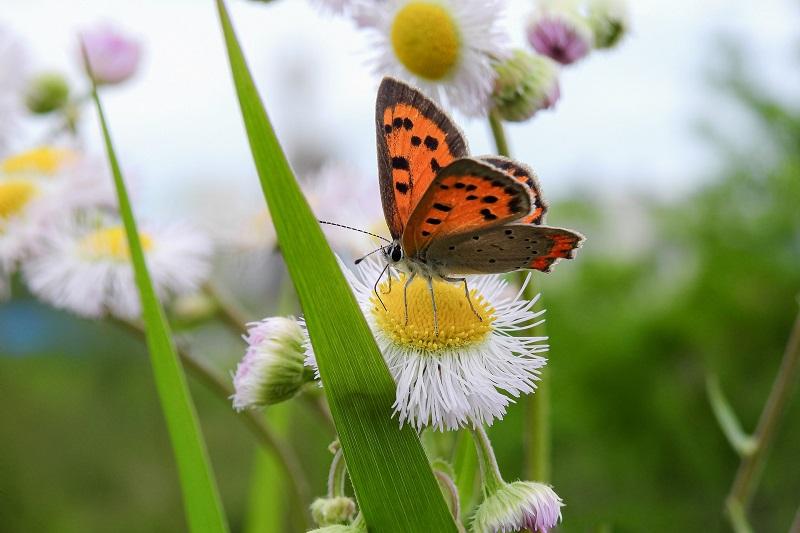
Two areas in Roundhay Park are to be restored as native wildflower meadows. The aim is to increase the habitat for native butterfly species within the park by protecting wild spaces. Leeds City Council, Tropical World staff and local volunteers are currently developing these areas.
Wild spaces
A wild space is one where butterflies and moths can complete their lifecycles. The area needs to enable them to feed, breed and shelter. There is no defined size, so long as the requirements are met, it is a wild space.
Find more information on the Butterfly Conservation website.
This project is run by Tropical World and Roundhay Park estate, in partnership with Butterfly Conservation.
Conservation Charity Nature's SAFE
Tropical World is proud to partner alongside the International Zoo Veterinary Group (IZVG) with Nature's Save Animals From Extinction (SAFE) conservation programme. One of the world's first living biobanks, they are on a mission to 'Save animals from extinction'.
As animal populations decline, a point is reached when the genetic diversity essential for species survival is lost. As the European Association of Zoos and Aquaria (EAZA) Biobank's UK-based cryopreservation partner, Nature's SAFE works with zoos and wildlife rescue centres to secure the future of animal biodiversity. They do this by storing cells and tissues from threatened wildlife species using advanced cryopreservation technologies, free of charge.
Through developing next-generation genetic rescue approaches to restore diversity to threatened populations, Nature's SAFE acts an insurance policy to prevent extinction.
Find our more on the Nature's Safe website.
BIAZA
BIAZA member zoos and aquariums don't just care for and conserve exotic species.
Members host a vast array of native species living wild on their diverse sites and are collaborating with campaigns to identify species and share valuable data.
Tropical World staff take part in nature walks, education workshops and butterfly meadow transect surveys, as a part of our contributions to iNaturalist and BIAZA’s Spotted on Site campaign.
Riverfly Monitoring
Tropical World has been participating in the Riverfly Monitoring initiative, run by the Riverfly partnership. The initiative ensures that angling and conservation groups can take action to conserve river environments by monitoring river quality. This is done by using a standardised methodology to collect materials from sample sites in rivers, with surveyors analysing, identifying, and counting eight invertebrate target groups. The sample sites are monitored on a monthly basis The presence or absence of these pollution-sensitive invertebrates reflect the water quality of the surveyed rivers. The data collected is then entered into the national riverfly database and once verified, are freely and publicly available. If results collected by the TW team show a decline in water quality in any of the survey sites, then it is flagged by the Ecology contact at the Riverfly Initiative and quick action can be taken to identify the potential source of pollution and deal with it.
As of 2025, we now have 5 members of the TW team who have been trained as certified Riverfly surveyors. We continue to monitor three sample sites – Wyke Beck, Horsforth Beck and Meanwood Beck. The results from these surveys are uploaded to the Riverfly Initiative database known as Cartographer.
Find out more on The Riverfly Partnership website.
Bumblebee Conservation BeeWalks
Tropical World contributes to the Bumblebee Conservation Trust’s BeeWalk Survey Scheme. This involves staff at Tropical World walking a transect on a fixed route once a month to monitor and count the abundance of bumblebees in the area around Tropical World. The transect route starts in Roundhay park at the castle folly, going up through the lakeside meadow, up to Canal gardens. This data is then uploaded to the BeeWalk scheme website and it helps the Bumblebee Conservation Trust monitor changes in bumblebee populations, detect any warning signs of decline as well as direct future conservation activities.
If you'd like to try the Roundhay Park BeeWalk for yourself, follow the route on the map below.
Find out more on the Bumblebee Conservation Trust website.